A Guide to Slot Win Both Ways Functions
When we analyze a new slot, the first technical detail we check is how winning combinations form. Among the many payout structures, the win both ways mechanic has built a loyal following because it increases the directional chances to land a prize. Instead of restricting payouts to sequences that start on the leftmost reel and run rightwards, a win both ways slot also credits combinations that begin on the rightmost reel and flow left. This single rule change modifies the session rhythm, often generating more frequent smaller hits and a different feel during base gameplay. To comprehend what win both ways really signifies in practice, we evaluate it against one of the most famous fixed-payline slots ever created: Book of Dead slots. That game does not use a two-way engine, yet its enduring popularity makes it the perfect benchmark for demonstrating how directional paylines work, what players get or lose when a slot pays both ways, and why the choice between the two systems matters far more than many appreciate.
What Win Both Ways Actually Functions on the Reels
The main distinction is in how the game reads symbols after every spin. In a traditional left-to-right slot, the software scans matching symbols along an active payline commencing from the leftmost reel. If three same symbols appear on neighboring reels beginning at reel one, the combination rewards; any sequence that does not reach the first reel is ignored. A win both ways engine eliminates that left-side anchor. It checks each payline from left to right and then again from right to left, treating both directions as just as valid. This implies a line of three matching symbols on reels three, four and five rewards just as readily as one on reels one, two and three. The real effect is a significant lift in hit frequency, because the number of feasible winning alignments virtually doubles without boosting the number of paylines or the stake per line. The mechanic does not modify the reel layout or the number of symbols; it simply re-evaluates the same spin result twice, once in each direction.
The way the Paytable Changes for Two-Way Payouts
Since win both ways slots produce more winning spins on average, developers rebalance the maths to keep the return to player within the intended range. The most common adjustment is a decrease in the payouts for lower-tier symbol combinations. Where a standard 10-payline game might pay five times the line bet for three premium symbols, a win both ways version with the same number of lines might pay only three or four times. The top-end prizes for five-of-a-kind combinations usually remain substantial, but the middle and lower bands are reduced. This is not a trick; it is how the game designer maintains the long-term RTP while delivering the more active base game that players who enjoy two-way mechanics tend to seek. We always recommend checking the paytable of any win both ways slot before playing, because the per-symbol values can look surprisingly low compared with a traditional left-to-right title that uses the same theme and reel layout.
- Lower symbol values are typically reduced by 20–40% compared to a single-direction equivalent.
- Five-of-a-kind premiums often keep similar payouts, but three- and four-of-a-kind combinations are softened.
- The total bet per spin stays the same; no extra wager is needed to activate two-way pays.
Contrasting Hit Frequency and Session Rhythm
When transitioning from a fixed-direction slot to a two-direction game, the most noticeable change is the cadence of wins. In a left-to-right only title, empty spins can accumulate, notably during phases where symbols land on the right side without touching the first reel. Win both ways transforms many of those almost-wins into small pays, which maintains the balance ticking over and reduces the feeling of long losing streak. This is particularly noticeable in high-risk slots, where the base game can in other cases feel brutal. However, the compromise is that single wins tend to be less on average, because the paytable has been reduced. Players who enjoy the excitement of less frequent but greater base-game hits may find a win both ways slot less satisfying, while those who value playtime and frequent feedback often are drawn to the mechanic. Book of Dead sits firmly in the first group, which is one reason its 10 fixed paylines provide such a nerve-wracking, high-pressure feel during ordinary spins.
How the Payline Direction Is Important More Than Many Players Think
The choice between a win both ways engine and a fixed left-to-right system is not merely a cosmetic difference; it fundamentally shapes the player’s emotional and financial ride. In a win both ways slot, the game seems busier. Small wins arrive from both sides, the balance varies less dramatically, and the session can seem more forgiving. In Book of Dead, the strict left-to-right rule creates a starker divide between the base game and the bonus round. The base game can be punishing, but the free spins feature carries the weight of the entire session’s anticipation. This divided structure appeals to players who like high-stakes decision-making and are willing to endure dry spells for the chance at a single life-altering payout. Neither approach is objectively superior; they address different psychological profiles and bankroll strategies. By understanding how Book of Dead implements its payline rules, we get a clearer lens for assessing any slot we try, whether it pays both ways or not.
What to Check When Playing a New Slot
Each time we launch a slot at first, we must recognize three things immediately. To begin with, the payout direction: does the game pay left to right only, both ways, or employ an any-adjacent-pays system that does away with paylines entirely? Second, the number of paylines or ways to win, and whether or not they are fixed or adjustable. Finally, the existence of any special symbols that supersede the standard rules, such as expanding symbols that award on non-adjacent reels during free spins. Many modern slots blend the line by providing win both ways as a purchasable feature or by enabling it only during bonus rounds. Reviewing the paytable before spinning is the single most valuable habit we can develop, because it discloses the mathematical framework that will govern the next hour of play. Utilizing Book of Dead as a reference point, we can ask concrete questions: does a new Egyptian-themed game award both ways, and if so, how are the symbol values been adjusted? Does it offer an expanding symbol, and does that symbol payout on any position or only on adjacent reels? These comparisons turn abstract statistics into actionable knowledge that improves our slot selection and bankroll management.
- Direction of payouts: left-to-right, both ways, or adjacent pay system.
- Count of paylines or ways to win, and whether they are fixed or adjustable.
- Special symbols that supersede standard rules, such as expanding symbols during free spins.
Book of Dead game: A Classic Payline Slot That Defines the Other Side
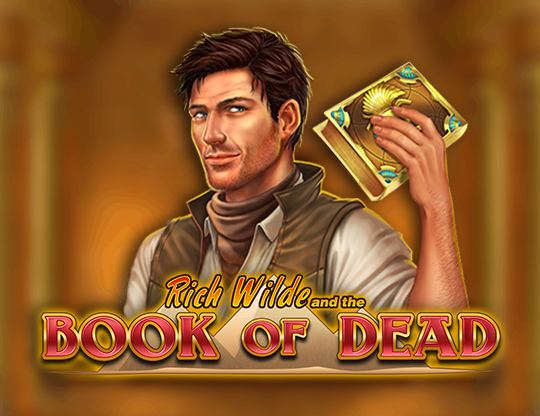
To understand what win both ways slots provide, it helps to study a game that intentionally avoids that method and still dominates the market. Book of Dead, made by Play’n GO, uses a five-reel, three-row grid with 10 predetermined paylines that pay exclusively from left to right. There is no two-way evaluation, no adjacent-pays mechanic, and no cluster system. Every winning sequence must commence on the first reel and run in a row along one of the 10 predetermined paths. This inflexible framework is key to the game’s character. It generates a high-volatility experience where the base game can seem sparse, but the possibility for dramatic free-spin rounds maintains players engaged. The game’s enduring standing in UK online casinos since its 2016 launch shows that a well-tuned single-direction payline system can be just as compelling as any modern pay-both-ways system, as long as the bonus features and maths are set appropriately. The Egyptian explorer setting, led by Rich Wilde, features hieroglyphic-style images and a dim, torch-lit backdrop that maintains the emphasis on symbol alignments. The paytable awards five-of-a-kind handsomely: Rich Wilde pays 5,000 coins for five on a payline, while the pharaoh and Horus offer 2,000 coins. The Book symbol functions as both wild and scatter, replacing for all symbols and starting free spins when three or more land anywhere.
Special Bonuses and No-Cost Spins
The free spins feature is the centerpiece of Book of Dead and the key origin of its legendary win potential. It triggers when three+ Book symbols show up anywhere on the reels in a one spin. The Book acts as both wild and scatter, so it can stand in in winning combinations while simultaneously counting towards the scatter trigger. 3 Books award 10 free spins, Four Book symbols grant 12 free spins, and 5 Books deliver 15 free spins. Before the free spins begin, the game arbitrarily selects one normal symbol from the paytable to become a unique expanding symbol for the period of the feature. This symbol can expand to cover all three positions on any reel where it is present, provided sufficient instances are present to form a win. The expansion occurs after the preliminary payout evaluation and pays per the game’s paytable, even on non-adjacent reels, which is a vital departure from the base game’s left-to-right rule. The enlarging mechanic can reactivate if three+ Book scatters land during the free spins, awarding an extra 10 spins with the very same special symbol. This can repeat, though the game’s max win cap of 5,000 times the total bet sets a actual limit.
Výplatní poměr, Volatility and the Mathematics Behind the Spins
Book of Dead carries a default return to player of 96.21%, which falls comfortably within the industry average for high-volatility video slots. This figure represents the theoretical long-term payout across millions of spins and is not a guarantee of short-term results. The volatility is rated as high, meaning wins are spread unevenly. Long sequences of losing or low-paying spins are common, interrupted by occasional larger hits, with the bulk of the payout potential concentrated in the free spins feature. The hit frequency—the percentage of spins that return a win of any size—is relatively low compared with win both ways slots, typically ranging around the low-to-mid 20% range. This means roughly three-quarters of spins in the base game will return nothing, a statistic that can feel stark if we are habituated to the gentler rhythm of a two-way payout engine. It is important to note that some UK casino operators offer Book of Dead at a reduced RTP setting, such as 94.25% or 91.25%, so we always check the in-game information panel before playing. High volatility demands a disciplined approach to bankroll management. A common guideline is to have at least 150 to 200 times the total bet available for a single session, because the game can consume 50 to 100 spins without a significant return. Win both ways slots with similar volatility often feel less punishing during the base game because the two-way mechanic generates more frequent small wins, which can stretch the same bankroll over a longer period.
How to Try Book of Dead: A Practical Walkthrough
Playing Book of Dead initially is straightforward, but several intentional steps can elevate the experience. We begin by loading the game at an approved UK casino and permitting the reels and audio to start. Before making a bet, we view the information screen to confirm the RTP setting and study the paytable. This screen displays the value of all symbol combinations, the payline patterns, and the rules for the free spins feature. Next, we set our total bet via the coin value selector. A prudent approach is to pick a stake that breaks our session bankroll into a minimum of 150 units. If we have £100 to play with, a bet of £0.50 or £0.60 per spin gives us approximately 170 to 200 spins, which gives a decent chance of triggering the bonus round. We afterwards press the spin button or configure the autoplay settings using a loss limit. During play, we look for three or more Book scatters, as this is the only path to the game’s significant payout potential. As the base game pays exclusively left to right, we rapidly learn to scan the first reel after every spin. Two Book symbols landing anywhere build anticipation, because a third Book in that spin activates the feature. We never raise our bet size after a losing streak, and we set a win goal and a loss limit before starting to keep the session manageable.
Gameplay Mechanics: Columns, Lines and Payout Lines
Book of Dead operates on a typical 5×3 layout with 10 set paylines. The quantity of lines cannot be adjusted, which means every spin covers all 10 combinations at the selected coin value. The lines run in standard patterns: three horizontal lines across the similarweb.com center and the top and bottom rows, plus several slanted and V-shaped routes. Because the game pays left to right only, the placement of the first symbol is crucial. A premium symbol that stops on reels two, three and four without a corresponding symbol on reel one is valueless, irrespective of how many lines it occupies. This is the core constraint that win both ways slots remove. The fixed-line method adds to the high volatility, because it channels the payout potential into less, harder-to-achieve matches, making every spin feel like a real gamble rather than a drip-feed of small returns.
Stake Configuration and Fund Strategy
Book of Dead slot caters to a wide range of budgets. The minimum total bet per spin typically starts at £0.10, obtained by setting the coin value to £0.01 and spinning the 10 fixed lines. The maximum total bet can hit £100 per spin at many UK-facing casinos, though some operators cap it at £50. The coin value selector enables granular adjustments, so we can fine-tune the stake to match our session bankroll. Because the paylines are fixed, the total bet is always the coin value multiplied by 10. There are no side bets or ante-bet features that change the RTP or volatility; the game plays identically at every stake level. This transparency is helpful when comparing Book of Dead with win both ways slots, which sometimes use variable line counts or require an extra bet to activate the two-way mechanic.
How to Make a Bet and Start Spinning
Beginning with Book of Dead is considered easy. We launch the game and find the coin value or total bet selector, usually presented at the bottom of the screen. Using the plus and minus arrows, we adjust the selected coin value, and the total bet changes automatically. The large spin button is positioned in the centre-right position, and pressing it once sets the reels in motion. An autoplay function exists in most jurisdictions, allowing us to configure a number of similarweb.com automatic spins with optional loss and single-win limits. We always recommend setting a loss limit when using autoplay, because the high volatility can exhaust a balance quickly during a cold streak. There is found no turbo or quick-spin button in the base game on many versions, however some casino platforms offer a fast-play setting. The game also includes a paytable button that shows all symbol values, payline patterns and feature rules, which we should review before committing real funds.
Max Win Potential and How It Stacks Up
Book of Dead sets the maximum win at 5,000 times the total stake per spin. This means a player betting £1 per spin can win up to £5,000 in a single game round, while a £10 stake increases the ceiling to £50,000. The cap applies across the entire game, including retriggered free spins, and any spin that would exceed this amount simply pays the maximum. This win ceiling is humble by modern standards, where many slots provide 10,000x or even 50,000x potential, but it continues to be highly competitive within the classic high-volatility segment. To visualise the maximum payout, imagine we are playing at £2 per spin. If Rich Wilde is the chosen expanding symbol and a full screen of him shows up, each of the 10 paylines awards 5,000 coins at the line bet of £0.20, generating £1,000 per line and a total of £10,000, exactly 5,000x the stake. In practice, most bonus rounds deliver far smaller returns, often between 20x and 200x the total bet. Win both ways slots with similar caps may have lower per-line symbol values, so the same visual outcome might pay less, but the two-way mechanic can make the event slightly more achievable. Neither system is inherently superior; they appeal to different player preferences.
Frequent Misunderstandings Regarding Win Both Ways and Book of Dead
A recurring point of confusion is the belief that Book of Dead must pay both ways because the expanding symbol during free spins can pay on non-adjacent reels. This is not the case. The expanding symbol mechanic is a feature-specific rule that supersedes the standard payline evaluation only for the chosen symbol and only during free spins. In the base game, the left-to-right rule applies without exception. Another misunderstanding involves the Book symbol itself. Because it acts as both wild and scatter, some players believe it pays as a scatter combination in addition to any wild wins it creates. In reality, the scatter payout for three or more Books is awarded separately, and the free spins trigger is the primary reward. Some players also think that high-volatility slots like Book of Dead are less fair than win both ways games with the same RTP. This is a misunderstanding of how volatility and RTP interact. A 96.21% RTP slot will, over an enormous number of spins, return roughly the same proportion of wagers regardless of its volatility or payout direction. The difference lies in the distribution: high volatility concentrates returns into fewer, larger wins, while lower volatility spreads them out. Book of Dead’s longevity stems from a combination of clear rules, a focused feature set, and a mathematical model that creates genuine tension. The expanding symbol free spins round is simple to understand but capable of producing dramatic results, and the 5,000x max win is attainable enough to feel credible without being so common that it loses its appeal. For players who have grown tired of slots that blur together with similar mechanics, Book of Dead offers a distinct, unapologetically volatile experience that still feels fresh nearly a decade after its release.
Lascia un commento